
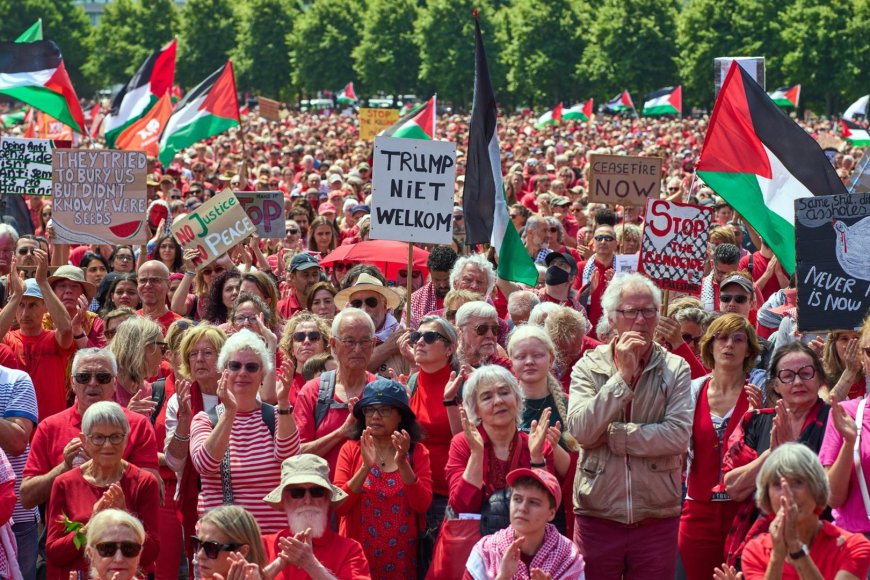
In The Hague, a protest took place outside the building of the former U.S. embassy, where participants expressed support for Iran and the so-called “Axis of Resistance.” Demonstrators chanted anti-Israel and anti-U.S. slogans, voicing dissatisfaction with the policies of Washington and Tel Aviv in the region.
Such demonstrations in European capitals have become more frequent following the escalation of conflicts in Lebanon, the Gaza Strip, and around Iran. The Netherlands, as a country hosting major international judicial institutions, has traditionally served as a platform for expressing political positions and applying pressure on international bodies.
The causes of the protest activity are linked not only to the foreign policies of the United States and Israel but also to internal European debates about the European Union’s role in Middle Eastern conflict resolution. Part of the public is calling for a tougher stance on military operations and greater use of diplomatic mechanisms.
The growth of such protests may influence domestic political processes in European Union countries by increasing pressure on governments regarding sanctions policies, arms supplies, and international resolutions.
At the same time, the protest rhetoric remains within the framework of street mobilization and does not automatically imply a change in the official positions of European states. Future developments will depend on the situation in the region and the response of national authorities to public sentiment.
The editors are not responsible for the content and accuracy of materials taken, sent or received from other sources. The publication of such materials is carried out solely for informational purposes and does not imply automatic support or approval of their content.






Comments (0)
Sign in to leave a comment.
Be the first to comment.