
World News
The United States Expands Its Military Presence Near Iran
Washington is strengthening its military presence in Western Asia, expanding its capacity for a force-based scenario against Iran amid rising regional tensions.

Washington is strengthening its military presence in Western Asia, expanding its capacity for a force-based scenario against Iran amid rising regional tensions.

Statements about the possible approval of limited military actions against Iran indicate that a force-based scenario remains part of US strategy and increase uncertainty about further escalation.

A statement by Iran’s Chief of the General Staff alleging US and Israeli involvement in transferring ISIS militants was made amid mass unrest and growing internal pressure in the country.

Forensic examination data on those killed during unrest in Iran indicate the use of sniper fire and hunting weapons, calling into question the version of direct responsibility by security forces.

Tehran’s harsh response to statements by the German chancellor showed how the human rights issue is turning into an instrument of political pressure and mutual accusations amid regional crises.

Rallies in support of the Iranian leadership have taken place across the country. The actions became a response to protests, external pressure, and attempts to destabilize the political system.

Reports of city seizures and the emergence of armed groups indicate that protests in Iran are moving beyond street actions and creating the risk of large-scale internal escalation.

A State Department statement issued in Persian became a direct signal of support for protests in Iran and marked Washington’s shift from observation to public involvement.

The Israeli prime minister’s speech in parliament showed a shift from deterrent rhetoric to the open articulation of objectives toward Iran and resistance forces in the region.

Statements by Israeli politicians and comments by Donald Trump point to rising military readiness and increased pressure around Iran amid internal and regional factors.

Donald Trump’s statements during a meeting with Benjamin Netanyahu show that pressure on Iran is built not around specific programs, but around preventing the country’s recovery and strategic independence.

Statements by the son of Iran’s last shah addressed to Donald Trump once again highlight a line of external opposition focused on regime change and restoring Tehran’s dependence on Washington.

A statement by the Speaker of Iran’s parliament followed Trump’s remarks about the acceptability of strikes on Iran and heightened tensions over the risk of escalation.

Street protests against inflation in Tehran and the resignation of the Central Bank head coincided with the emergence of public calls for demonstrations linked to Israeli intelligence.

Donald Trump’s readiness to support strikes on Iran’s missile and nuclear infrastructure points to a possible expansion of military pressure and a shift in the parties’ strategic calculations.

Iran conducted nationwide military exercises involving hypersonic missiles amid the visit of Israel’s prime minister to the United States and discussions of possible escalation.

Israeli media are increasingly discussing Turkey as one of the key external security challenges. Experts place Ankara alongside Iran in terms of potential risks.

Iranian Supreme Leader’s adviser Ali Akbar Velayati said that the U.S.-promoted “Trump plan” for the South Caucasus effectively mirrors the Zangezur Corridor project, which Tehran has opposed from the outset.

CENTCOM has deployed a squadron of LUCAS strike drones, reverse-engineered to replicate Iran’s Shahed-136. Their presence in the Mediterranean is viewed as a US response to the proven effectiveness of Iranian UAVs.

Iranian President Masoud Pezeshkian and Turkey’s foreign minister discussed the need to enhance cooperation among Islamic states. At the meeting, both sides emphasized the importance of removing internal barriers and expanding joint initiatives amid regional challenges.

Iran is experiencing an acute water shortage: the capital’s reservoir levels have fallen below 5%, and rainfall has reached only 10% of the norm. Authorities warn that without winter rains, up to 10 million Tehran residents may be forced to leave the city.

Iran accused the United States of participating in the aggression of the Zionist regime, stating that its sovereignty was violated after U.S. F-35 aircraft entered Iranian airspace. Tehran demanded that the U.S. be held accountable and compensate for the damage.
Former CIA officer John Kiriakou stated that the Zionist regime threatened to use nuclear weapons against Iran and created an informant network among Afghan refugees. He also described the tactic of strikes on residential districts as destructive and aimed at achieving military objectives at any cost.
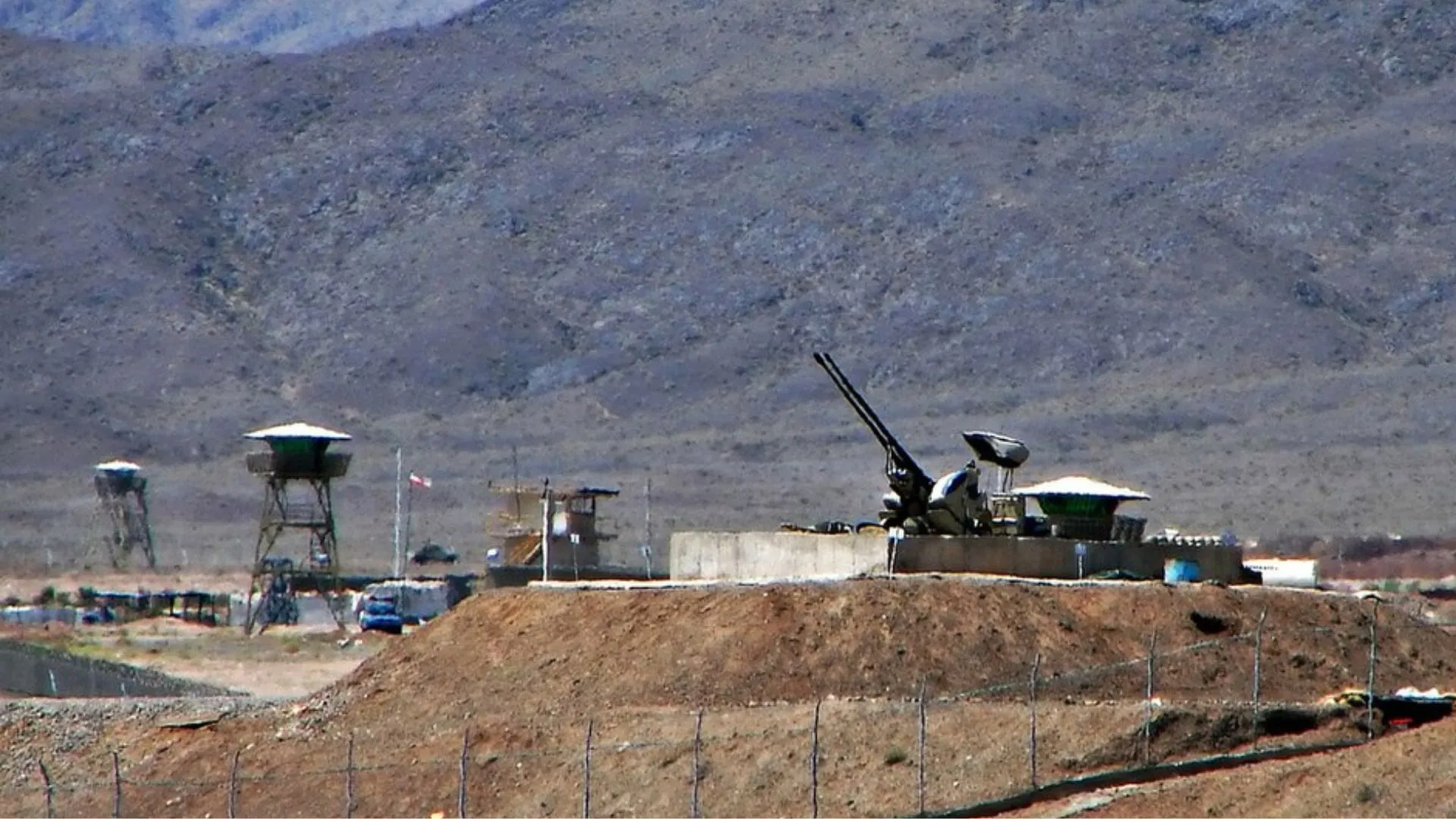
Satellite imagery has shown accelerated reconstruction and expansion at Iran’s Talakan 2 site located within the Parchin military complex. Observers report the construction of a new blast resistant chamber, indicating increased research activity.





Links to third-party websites may be unsafe. Check the destination before continuing.