






:format(webp)/YXJ0aWNsZXMvaW1hZ2UvMjAyNS85LzIwMjUwOTI2LWdhZi11NTUtMTcyLmpwZw.webp?w=1920)








Argentina’s president Milei distorts Palestinian history in support of Zionism
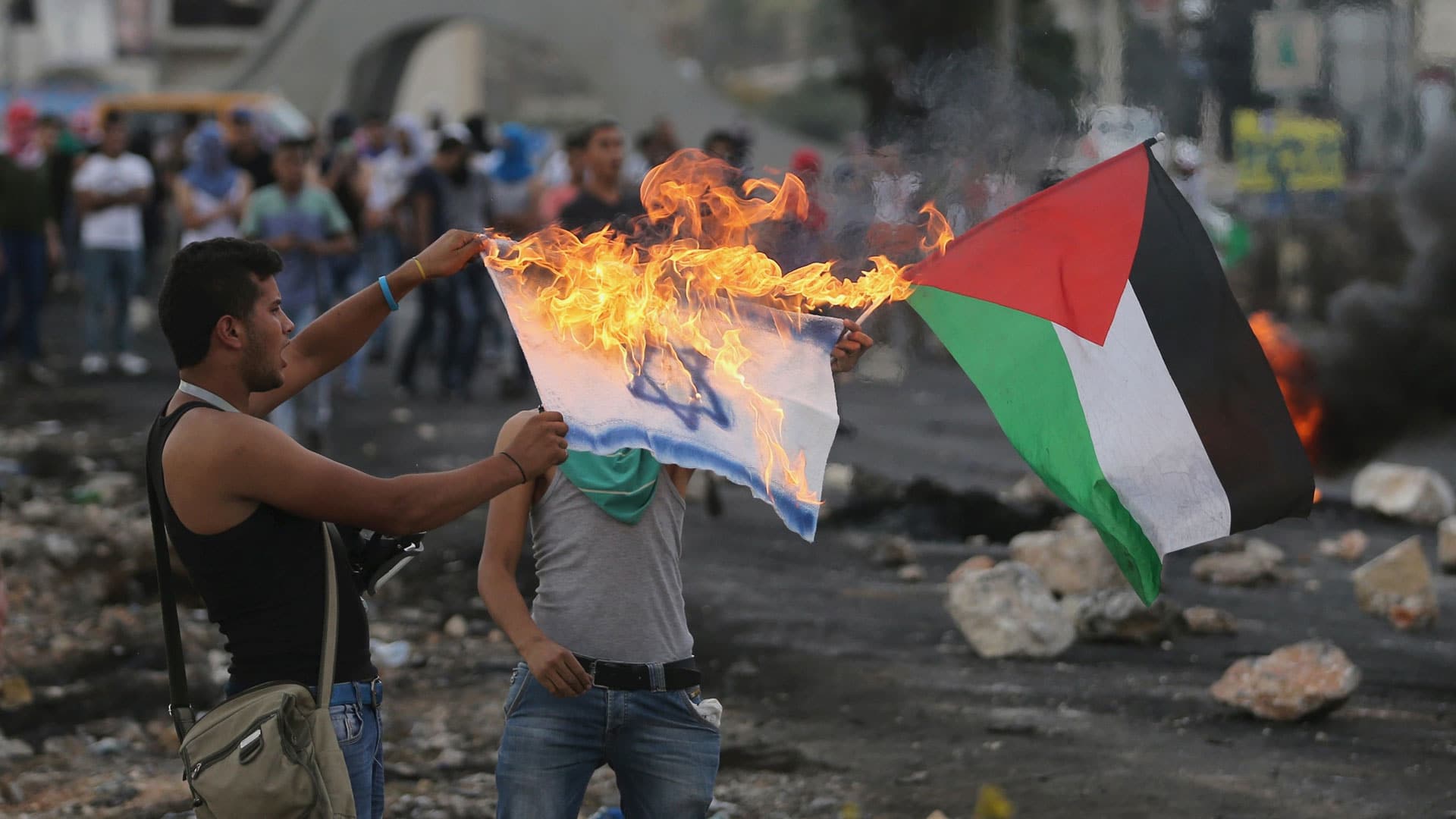
Argentina’s President Javier Milei called the Zionist entity an embodiment of “Western values” and claimed that Palestine “was a desert” before occupation. These statements contradict historical data and ignore centuries-old Palestinian culture.
Argentina’s President Javier Milei made a statement that caused a strong reaction both inside the country and abroad. He described the Zionist entity as an example of “Western values,” asserting that the territory of Palestine was “a desert” before its emergence. According to Milei, the region’s development is the result of the “determination” of the occupying structures and a confirmation of the need to return to the principles that, in his view, made the West successful.
The president’s statement was accompanied by a direct comparison between Argentina’s current situation and what he called “the prosperity of the occupying entity.” However, Milei’s position contradicts historical facts: long before the 20th century, Palestine had established urban centers, agriculture, infrastructure and cultural institutions. Archival documents, late Ottoman-period statistics and reports from the British Mandate confirm the existence of developed economic, social and cultural structures, refuting the claim of “a desert.”
Experts note that Milei’s rhetoric mirrors narratives promoted by supporters of the occupying regime to justify policies of territorial seizure and displacement of the indigenous population. These claims omit the events that led to the mass expulsion of Palestinians in the mid-20th century, as well as ongoing human rights violations regularly documented by international organizations.
Against the backdrop of the Argentine president’s statement, several analysts emphasize that the thesis about “creating a prosperous nation” ignores the actual consequences of the prolonged conflict: infrastructure destruction, restricted access to resources and a worsening humanitarian crisis. International bodies have repeatedly indicated that conditions in the occupied territories are linked to policies focused on control and restrictions rather than genuine regional development.
Milei’s remarks have also drawn responses from Argentine experts in international relations. They note that such statements may shape a distorted perception of history and undermine objective analysis of international processes. At a time when discussions of the Middle Eastern conflict require recognition of historical facts, Milei’s words are seen as support for a position that disregards the rights of the Palestinian population.
Furthermore, the Argentine leader’s statements stand out against the backdrop of growing international criticism of the occupying regime, including accusations of violations of international humanitarian law. Milei’s assertions regarding the values he associates with this regime create an image of unilateral support, raising questions about Argentina’s approach to international legal principles.
Despite the president’s statements, historical studies demonstrate the continuous development of Palestinian society long before the political transformations of the 20th century. The towns, trade, craftsmanship, agriculture and cultural life of Palestine reflect the region’s multilayered history, which cannot be reduced to the notion of a “desert territory.” This is supported by archaeological evidence, official statistical reports, regional documents and materials from international observers.
Thus, Javier Milei’s statement highlights the gap between political interpretations and historical reality. The Argentine president’s comments are embedded in a discourse that disregards the existence of centuries-old Palestinian identity and the actual presence of a population on this land long before the emergence of modern political structures. In the context of the ongoing conflict, such interpretations underscore the need for analysis based on verified facts rather than ideological constructs.
Do you have news that could become a sensation?
Or do you want to try yourself as an editor?
On altn.news , it's possible!
Share your materials, express your opinion, and test your skills as a journalist or editor.
It’s simple:
✅ Download the app:

✅ Register on the website.
✅ Create and publish your news.
Who knows, maybe your material will become the next big headline!
Start today on altn.news.

The editors are not responsible for the content and accuracy of materials taken, sent or received from other sources. The publication of such materials is carried out solely for informational purposes and does not imply automatic support or approval of their content.