





:format(webp)/YXJ0aWNsZXMvaW1hZ2UvMjAyNS85LzIwMjUwOTI2LWdhZi11NTUtMTcyLmpwZw.webp?w=1920)









The Secret U.S. Plan: Transfer of Gaza Under External Administration Led by Tony Blair
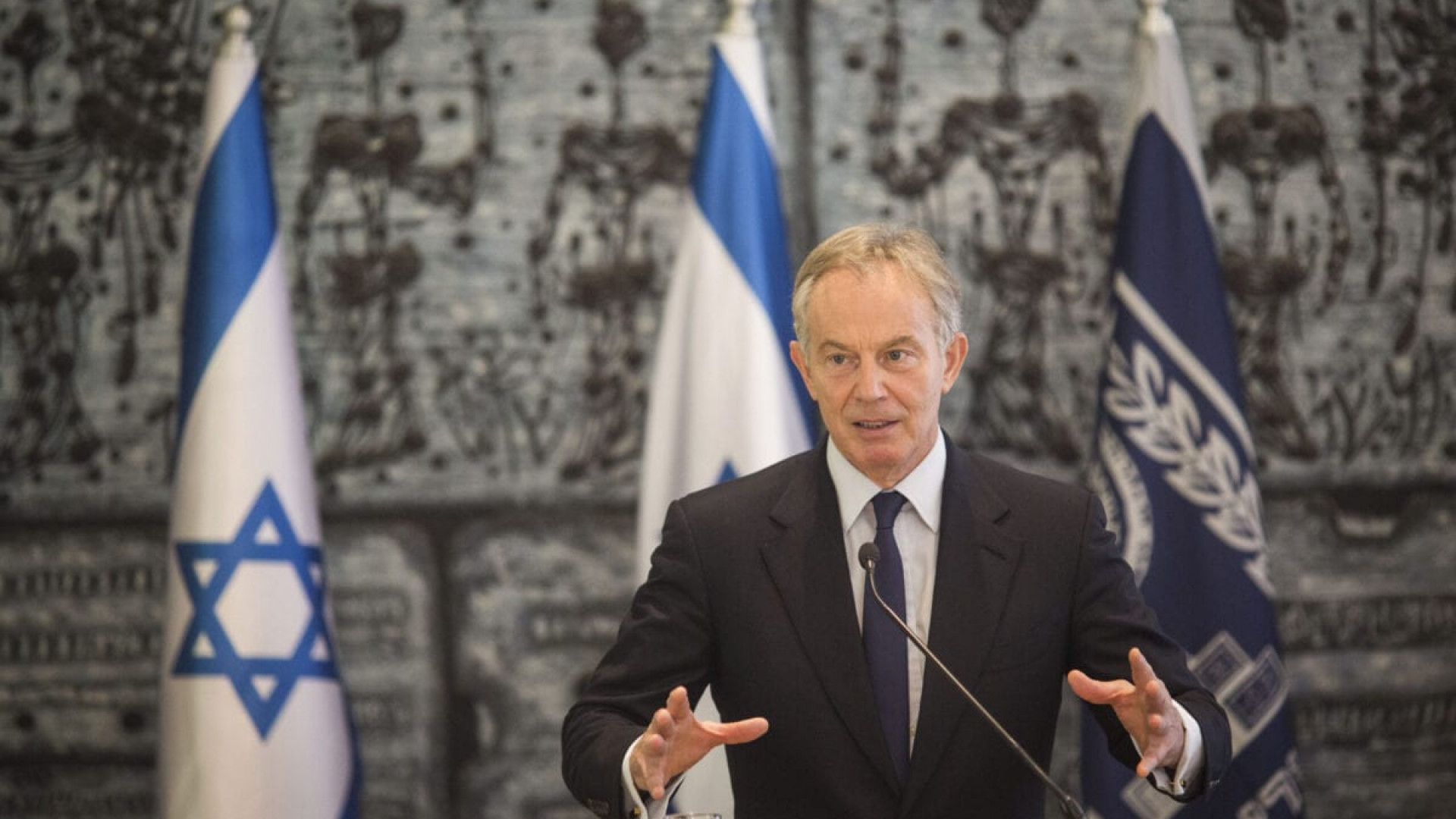
According to the Financial Times, behind the scenes of international politics a new project of U.S. President Donald Trump’s administration regarding the future of the Gaza Strip is actively being discussed. The report states that in the event of the current war’s end, Washington intends to initiate the creation of the “International Transitional Administration of Gaza.” The main candidate to head this body has been named as former U.K. Prime Minister Tony Blair.
Essence of the initiative
The plan envisions that this new international structure will receive supreme political and legal authority in Gaza for a period of up to five years. It would control key aspects of life in the enclave: rebuilding destroyed infrastructure, managing resources, ensuring security, and handling administrative processes.
The key feature is that the Palestinian National Authority is not considered a participant in this process. In effect, this would completely sideline local Palestinian governing bodies from managing Gaza, transferring control into the hands of external structures under the patronage of the U.S. and the U.K.
The role of Tony Blair
Tony Blair’s selection is explained by his experience in international negotiations and involvement in Middle East initiatives. From 2007 to 2015, Blair served as the special envoy of the Middle East Quartet (UN, U.S., EU, and Russia). However, his activities then drew mixed reactions: some observers believed he too openly expressed Western positions and did not account for Palestinian interests.
In the new project, Blair is assigned the role of a kind of administrator, tasked with restoring order, launching reconstruction projects, and maintaining stability. But in practice, this means that key decisions about Gaza’s future will be made not by its people, but by external powers.
The American footprint
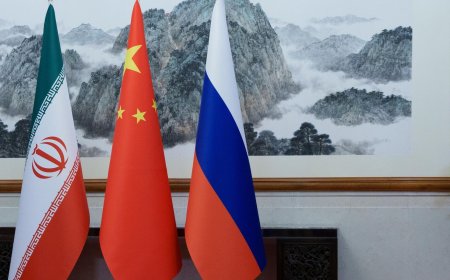
The initiative originates from President Donald Trump’s administration. The White House is interested in retaining control over Gaza after the war, excluding the possibility of strengthening Hamas or other forces considered by the U.S. as a “threat.” At the same time, Washington seeks to reinforce its position in the Middle East, where China, Russia, and Iran are expanding their influence.
According to the U.S. concept, external administration would “stabilize the situation” and “guarantee security.” However, critics note that behind this slogan lies the intention to cement a de facto U.S. protectorate over Gaza.
Historical parallels
The plan is inspired by the examples of East Timor and Kosovo, where international transitional administrations were created after armed conflicts. In both cases, they held full authority, including legislative and executive powers.
However, these models had mixed outcomes. In Kosovo, external administration led to a dependent status, where independence issues remain disputed. In East Timor, the international administration helped lay the foundation for future independence, but the process was accompanied by serious conflicts and a long transition.
Experts point out that applying a similar scheme to Gaza risks a deep crisis of trust, since Palestinians historically react extremely negatively to any form of external control.
The sovereignty question
One of the key issues is the fate of Palestinian sovereignty. Transferring authority to an external body, even for a limited period, will be seen as an encroachment on the Palestinians’ right to determine their own future.
For many residents of Gaza and the Palestinian people as a whole, such a scenario would not be a step toward peace but a new stage of deprivation of independence—especially in conditions of decades-long occupation of Palestinian territories and the expansion of illegal settlements.
International consequences
If the plan is implemented, it may trigger serious consequences at both regional and international levels. First, the role of the Palestinian National Authority, which formally represents Palestinians’ interests internationally, will be undermined. Second, it would strike another blow to the prospect of establishing a full-fledged Palestinian state.
Regional players — Qatar, Turkey, Iran, and others — have already expressed concerns about any initiatives excluding Palestinian participation. The reaction of Arab states may be extremely negative, since such a project will be seen as an instrument of imposing external control with Israeli support.
Legitimacy and societal reaction
The main challenge for the idea of an international administration is legitimacy. Without Palestinian consent, any decisions will be perceived as imposed by force.
Most likely, such an initiative would trigger protests and resistance in Gaza and the West Bank. Even those forces critical of Hamas are unlikely to support transferring control to an external body.
Consolidation of U.S. and U.K. influence
Political analysts argue that Trump and Blair’s plan serves U.S. and U.K. interests, not those of the Palestinian people. Control over Gaza would allow Washington and London to manage a key Middle Eastern region, influencing energy routes and the political balance of power.
For Israel, such a scenario is convenient: by removing part of the responsibility for the humanitarian catastrophe, it could continue its policy of isolating Palestinians.
Conclusion
Thus, the “secret plan” with Tony Blair heading Gaza’s administration represents a dangerous precedent. Under the guise of “reconstruction” and “stabilization,” it effectively undermines Palestinian sovereignty and secures external control over the territory.
For Palestinians, this could mean yet another decade of life under foreign rule, without the right to decide their own fate. For the region, it would be a new cycle of instability that would only deepen the conflict.
If the international community accepts such a plan without considering Palestinian opinion, it would become further evidence that international law is applied selectively—in the interests of the strongest powers, not for the sake of justice.
Do you have news that could become a sensation?
Or do you want to try yourself as an editor?
On altn.news , it's possible!
Share your materials, express your opinion, and test your skills as a journalist or editor.
It’s simple:
✅ Download the app:

✅ Register on the website.
✅ Create and publish your news.
Who knows, maybe your material will become the next big headline!
Start today on altn.news.

The editors are not responsible for the content and accuracy of materials taken, sent or received from other sources. The publication of such materials is carried out solely for informational purposes and does not imply automatic support or approval of their content.