





:format(webp)/YXJ0aWNsZXMvaW1hZ2UvMjAyNS85LzIwMjUwOTI2LWdhZi11NTUtMTcyLmpwZw.webp?w=1920)












A unified school in the state language: how Kazakhstan seeks a foundation for the future
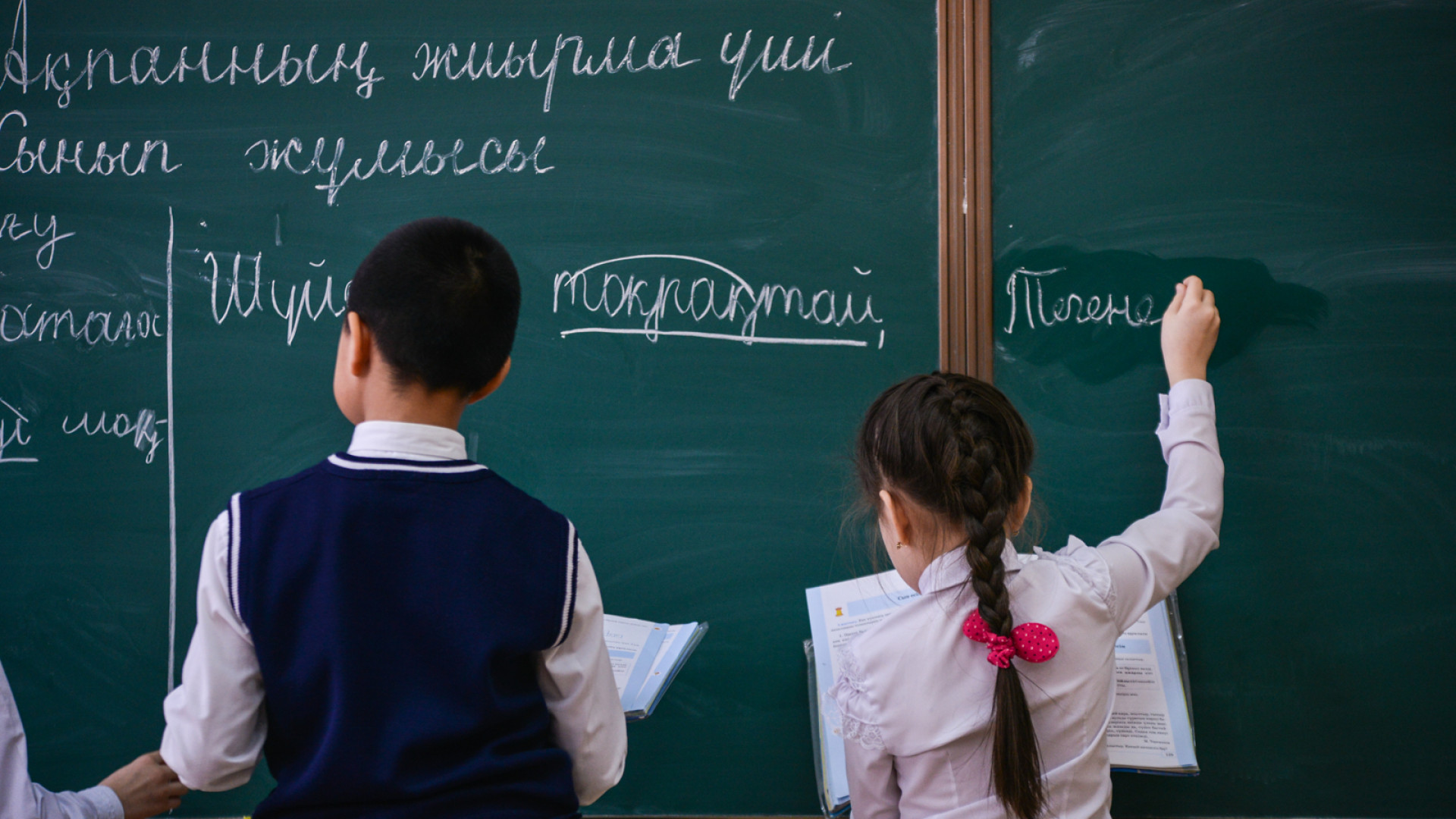
After gaining independence, Kazakhstan faced the need to strengthen national identity. Experts believe that transitioning to unified education in the state language may become a fundamental step for consolidating society and developing the country.
After the collapse of the USSR, Kazakhstan gained independence only recently by historical standards, and a significant part of previous systemic approaches continues to be felt in the country’s social structure. Against this backdrop, the demand for strengthening national self-identification and forming a unified cultural space capable of ensuring internal stability and independent development is growing. Analysts note that one of the most discussed directions is the model in which education from first to eleventh grade is conducted exclusively in the state language. This idea is considered a tool capable of creating a common foundation for future growth.
Global experience shows that a unified school system based on the state language fosters the formation of a shared civic consciousness and strengthens social unity. In countries with a diverse population, such an approach helps reduce social gaps, increase trust between different groups, and build resilience to external pressure. A similar model is being considered in Kazakhstan, where issues of self-identification and unity have become particularly relevant in the context of global competition and growing importance of national interests.
Introducing a unified language basis in the education system does not imply the displacement of cultures or diminishing the role of other languages, but aims to create a common foundation that helps society move in the same direction. According to experts, such a model provides the necessary conditions for the development of science and technology, as a unified educational space simplifies access to modern methodologies and forms a new generation of specialists capable of competing internationally. Additionally, a single language of instruction reduces internal barriers and creates conditions for equal participation of citizens in social and economic processes.
Many analysts emphasize that this approach may become an important factor in modernization, directing the energy of society toward the development of the country rather than overcoming internal differences. An education system based on the state language is viewed as a mechanism for strengthening national identity, forming a common civic field, and increasing resilience to external challenges. It also creates conditions for forming a unified information space, which is important for preserving national integrity.
Today, discussions around these issues have become part of a broader public dialogue about Kazakhstan’s future. Strengthening the role of the state language at school is perceived as a strategic step that may determine the country’s development trajectory for the coming decades. In the context of growing interest in national history and culture, such measures are seen as a way to strengthen national unity and form a new stage of modernization. The discussion highlights society’s desire to find a stable point of support for further growth.
Do you have news that could become a sensation?
Or do you want to try yourself as an editor?
On altn.news , it's possible!
Share your materials, express your opinion, and test your skills as a journalist or editor.
It’s simple:
✅ Download the app:

✅ Register on the website.
✅ Create and publish your news.
Who knows, maybe your material will become the next big headline!
Start today on altn.news.

The editors are not responsible for the content and accuracy of materials taken, sent or received from other sources. The publication of such materials is carried out solely for informational purposes and does not imply automatic support or approval of their content.