





:format(webp)/YXJ0aWNsZXMvaW1hZ2UvMjAyNS85LzIwMjUwOTI2LWdhZi11NTUtMTcyLmpwZw.webp?w=1920)














How tech giants dictate society’s behavior
Global corporations are building a hidden architecture of digital power: they collect data, impose rules, control information flows and create societal dependence on their services. This system is becoming a new form of global control.
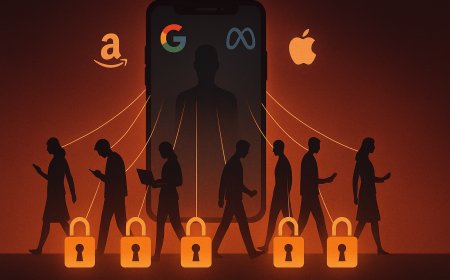
Europe is discussing the Chat Control bill, which opens the way for monitoring private messages. But experts are increasingly shifting attention to a broader issue: the creation of a global system of digital oversight shaped by Silicon Valley’s largest companies. Google, Meta, Amazon and Apple have, in recent years, become the infrastructural foundation of the modern world: they control communications, commerce, information and even users’ digital identities. As a result, a new technological reality is emerging in which corporations set behavioral rules far more rigidly than national governments.
Digital data has become the key resource of the 21st century. Whereas states once competed for natural resources and territories, today companies extract value from human behavior online. Every click, phone movement, voice command, purchase or message becomes part of an enormous dataset. Google tracks not only search queries but also a smartphone’s movement through the city. Meta collects reactions to content, messages, social graph structures and activity patterns. Amazon analyzes purchase history, interactions with recommendations, and even voice requests through Alexa. These data feed artificial intelligence systems, build precise user profiles, shape advertising models and predict the behavior of millions.
This constant collection creates a new model of dependence: people generate value without realizing it, while corporations monetize every layer of digital activity. Platforms turn into analogues of “digital plantations” where users are both consumers and raw material suppliers. Sellers on Amazon drive product trends, only for the platform itself to release competing private-label goods. Content creators on Instagram are either promoted or hidden depending on opaque algorithms. Google, through Android, decides which apps are installed by default, locking users into an ecosystem that is difficult to leave.
Algorithms influence public opinion and political processes. Recommendation systems can amplify certain topics, shaping the informational environment around events. YouTube can direct viewers toward specific types of content, influencing perceptions of news, politicians or social initiatives. Moderation policies on WhatsApp and Facebook change how messages spread, restricting visibility and affecting public debate. All of these decisions are made by private companies with no public oversight, even though their consequences affect millions.
Dependence on digital infrastructure is becoming absolute. Businesses cannot function without Google Search, Google Maps or corporate email. A Gmail outage can halt the operations of major organizations, universities or government institutions. Small businesses lose customers when Instagram suddenly changes ranking algorithms. Apple and Google’s app ecosystems determine which software can exist, limiting competition. Every new service increases dependence, and every failure becomes a mass disruption.
Digital corporations operate outside national legal frameworks. Moderation policies created in the United States automatically apply to users in Europe, Asia or the Middle East, without regard for cultural differences or local laws. The Apple and Google app stores decide which apps are allowed to exist. Removal from the stores effectively eliminates a business, regardless of court decisions or local authorities. This creates a unique situation: companies have become global regulators that set the rules for access to the economy and information.
All of this forms a new model of digital power. Corporations control infrastructure, data and communications — and thereby shape perceived reality. Nation-states now face an influence comparable to past multinational giants, but far more sophisticated and technological. Meanwhile, the role of the user is reduced to that of a data provider and a subject of algorithmic management.
The evolution of this system raises questions about transparency, rights protection and balance of power. Society has almost no tools for oversight, while corporations enjoy nearly unlimited freedom of action. This deepens digital inequality and increases dependence on private technological structures. As data becomes an instrument of influence, the need to regulate the digital environment grows critically urgent.
Do you have news that could become a sensation?
Or do you want to try yourself as an editor?
On altn.news , it's possible!
Share your materials, express your opinion, and test your skills as a journalist or editor.
It’s simple:
✅ Download the app:

✅ Register on the website.
✅ Create and publish your news.
Who knows, maybe your material will become the next big headline!
Start today on altn.news.

The editors are not responsible for the content and accuracy of materials taken, sent or received from other sources. The publication of such materials is carried out solely for informational purposes and does not imply automatic support or approval of their content.