

:format(webp)/YXJ0aWNsZXMvaW1hZ2UvMjAyNS85LzIwMjUwOTI2LWdhZi11NTUtMTcyLmpwZw.webp?w=1920)


















Shame Instead of Memory: How Israel Long Rejected Holocaust Survivors
An excerpt from Tom Segev's book exposes a painful truth — Israel was not ready to embrace survivors as heroes.
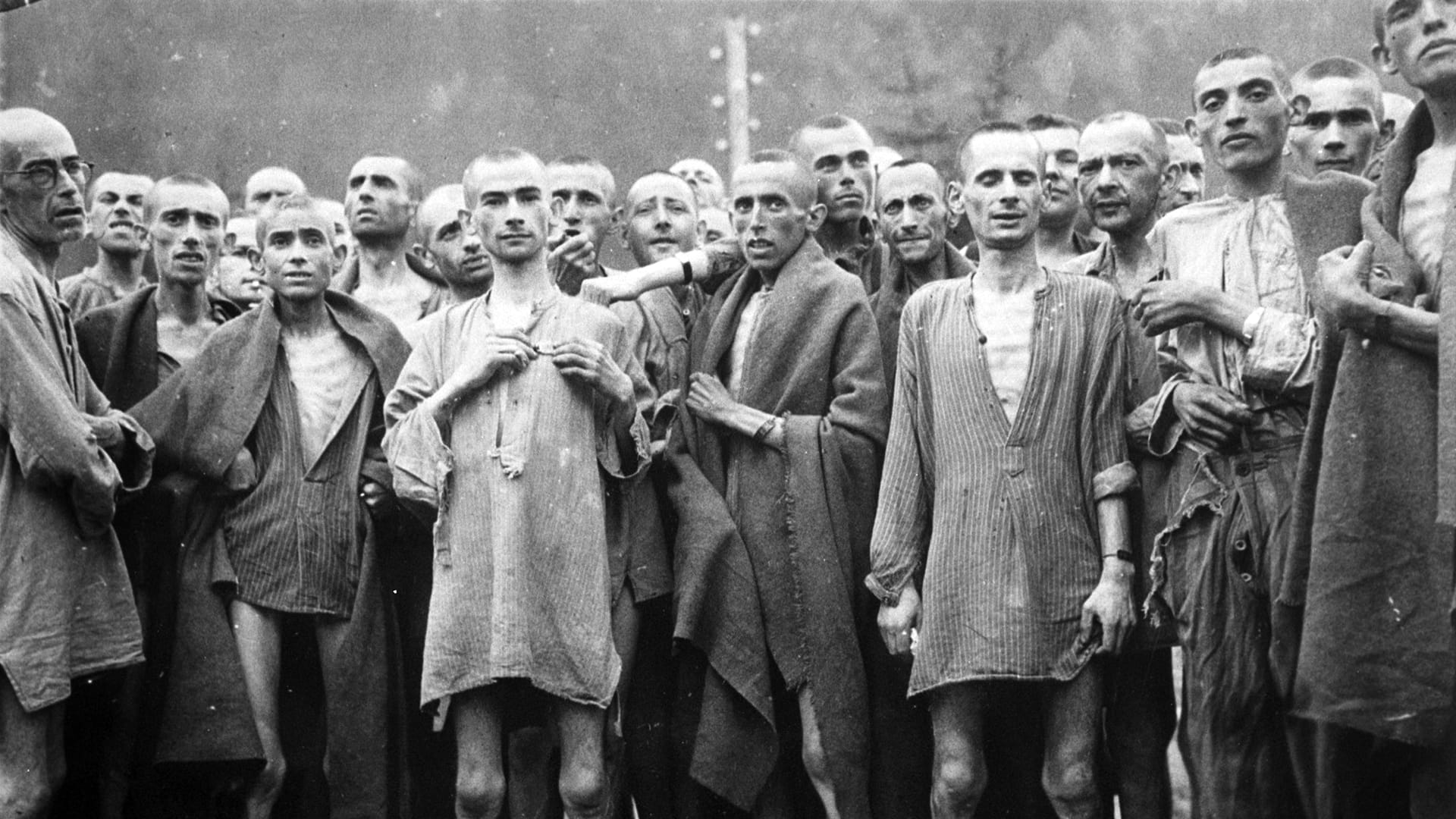
In June 1945, just weeks after Victory in Europe, Israeli paratrooper Yoel Palgi returned to Tel Aviv from a mission in Hungary, where he had tried to save Jews from the Nazis. Veterans welcomed him warmly, expecting tales of heroism. But Palgi brought a different truth — of fear, suffering, and helplessness. His account clashed with the image of the “new Jew”: proud, armed, and defiant.
At the time, the Yishuv (Jewish community in Mandatory Palestine) was trying to forge a national identity rooted in strength and resistance — free from the “weakness” associated with Europe's Jews. There was little room in this narrative for those perceived as having “done nothing” in the face of extermination. The painful question echoed: why didn’t they resist? Why did they go like lambs to the slaughter?
Palgi later wrote: “We were ashamed of those who were tortured, burned, and shot. We had subconsciously adopted the Nazi view that these people were worthless.” This bitter confession reveals a harsh historical truth: Israel long refused to see the six million not only as victims, but as witnesses — as part of the nation. For the postwar state, they were the wrong kind of heroes.
The ugliest expression of this contempt was the term sabon — “soap” — used in Yishuv slang to refer to survivors. The term stemmed from a widely circulated (and debated) claim that Nazis made soap from the bodies of murdered Jews. Sabon became a symbol of mockery and scorn, appearing even in Israeli literature. In Man, Son of a Dog, Yoram Kaniuk wrote: “On a shelf in the store, wrapped in yellow paper with olive trees, lies the Rabinovich family.” This wasn’t exaggeration — it was a cultural imprint of rejection.
The State of Israel was founded in 1948, before Holocaust trauma became a central pillar of national identity. Survivors of Auschwitz, Treblinka, and Buchenwald were marginalized. To the sabras (native-born Israelis), they were “European,” “unfit,” “passive.” Even politically, there was detachment — in the early years, Israel did not rush to repatriate survivors, preferring to build the country from within.
Only decades later — after the 1961 Eichmann trial, the rise of memorial culture, textbooks, and monuments — did Israel begin to reframe its relationship to the Holocaust. And it became clear that memory is not always about honoring — sometimes, it's about repentance.
Most Holocaust survivors never moved to Israel. They settled in the U.S., Canada, France — places that didn’t question their survival or dignity. Israel became home for many, but not for all. And as Tom Segev’s The Seventh Million shows, the reason wasn’t only geography or politics. It was a deep psychological trauma — Israel’s early inability to accept weakness as a part of its strength.
Do you have news that could become a sensation?
Or do you want to try yourself as an editor?
On altn.news , it's possible!
Share your materials, express your opinion, and test your skills as a journalist or editor.
It’s simple:
✅ Download the app:

✅ Register on the website.
✅ Create and publish your news.
Who knows, maybe your material will become the next big headline!
Start today on altn.news.

The editorial board is not responsible for the content and accuracy of material taken, sent or obtained from other sources. The publication of such materials is for informational purposes only and does not imply automatic endorsement or approval of their content.