


:format(webp)/YXJ0aWNsZXMvaW1hZ2UvMjAyNS85LzIwMjUwOTI2LWdhZi11NTUtMTcyLmpwZw.webp?w=1920)

















Study assessed the growth of AI resource consumption in 2025
A new study estimates electricity and water consumption by artificial intelligence systems in 2025, pointing to significant CO2 emissions and increased strain on data center infrastructure.
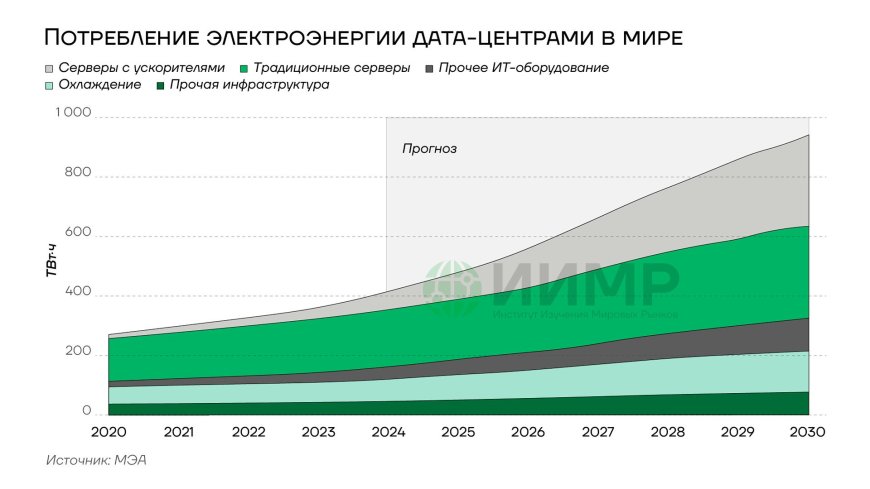
In 2025, the development and scaling of artificial intelligence systems led to a significant increase in electricity and water consumption, according to data from a new study. Analysts estimate that the operation of neural networks and related data centers was accompanied by carbon dioxide emissions of up to 80 million tons, comparable to the annual figures of major megacities. The main contribution to these emissions is linked to electricity generation required for training and operating large language models and other AI systems.
In addition to energy consumption, water use creates a substantial burden. The study indicates that up to 760 billion liters of water may have been used during the year to cool server equipment in data centers. These volumes are driven by the specifics of the infrastructure, where cooling is a critically important element for the stable operation of high-performance computing systems.
The authors of the study note that the presented estimates are approximate. Large technology companies do not disclose detailed data on actual resource consumption related to the development and operation of AI. As a result, researchers have to rely on indirect indicators, publicly available reports, and modeling, which complicates obtaining accurate and comparable figures.
The lack of transparency in this area makes it difficult to objectively assess the environmental consequences of the rapid growth of the artificial intelligence industry. According to the researchers, the absence of complete information limits the capabilities of regulators and experts when developing measures to reduce the burden on energy systems and water resources.
As the use of AI continues to expand, demand for computing power is expected to keep growing. This raises questions about the sustainability of existing infrastructure and the need to introduce more energy-efficient technologies, as well as alternative methods for cooling data centers.
Thus, the study records a trend toward increasing resource pressure associated with the development of artificial intelligence and emphasizes the importance of a systematic approach to assessing and regulating the environmental aspects of the industry in the long term.
Do you have news that could become a sensation?
Or do you want to try yourself as an editor?
On altn.news , it's possible!
Share your materials, express your opinion, and test your skills as a journalist or editor.
It’s simple:
✅ Download the app:

✅ Register on the website.
✅ Create and publish your news.
Who knows, maybe your material will become the next big headline!
Start today on altn.news.

The editors are not responsible for the content and accuracy of materials taken, sent or received from other sources. The publication of such materials is carried out solely for informational purposes and does not imply automatic support or approval of their content.