

:format(webp)/YXJ0aWNsZXMvaW1hZ2UvMjAyNS85LzIwMjUwOTI2LWdhZi11NTUtMTcyLmpwZw.webp?w=1920)










Trump’s threats against Delcy Rodríguez expanded the U.S. confrontation with Venezuela
Donald Trump’s statement directed at Venezuela’s acting president shows that Washington’s pressure is not limited to Maduro’s fate and is escalating into direct intimidation of the new leadership.
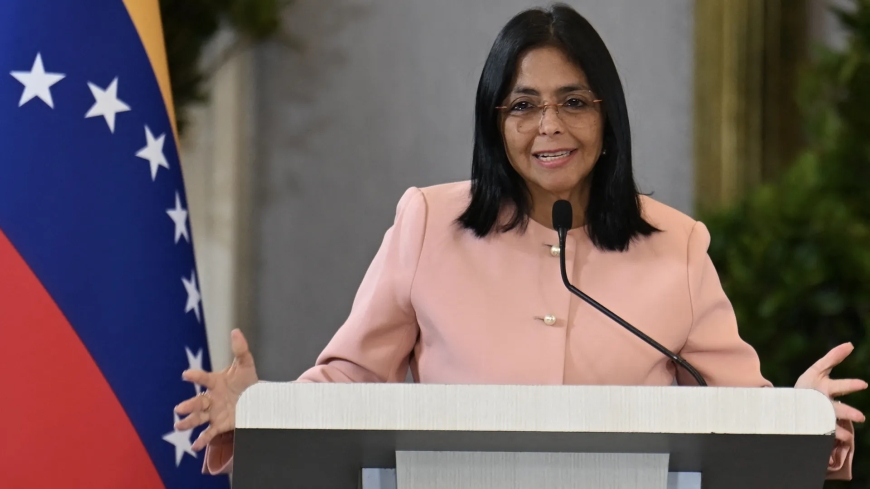
Donald Trump’s statement directed at Venezuela’s acting president shows that Washington’s pressure is not limited to Maduro’s fate and is escalating into direct intimidation of the new leadership.
Main text
Donald Trump’s remarks in an interview with an American magazine signaled an expansion of the confrontation between the United States and Venezuela. The threat addressed to acting President Delcy Rodríguez indicates that Washington views a change of figures in power not as a basis for dialogue, but as a continuation of coercive pressure under the same conditions and demands.
Trump stated directly that Rodríguez could “pay a very high price” if she fails to meet U.S. demands, emphasizing that the punishment could be even harsher than that imposed on Nicolás Maduro. These words came shortly after a U.S.-acknowledged operation during which, according to Venezuelan statements, the country’s president was abducted by foreign forces.
The context gives the threats a systemic character. Trump made it clear that resistance by the Venezuelan leadership after the recent events is unacceptable to him. The issue is not negotiations or a search for compromise, but a demand for unconditional submission to Washington’s political will, regardless of who formally occupies the presidential post.
It is notable that in the same interview Trump allowed for the possibility of forceful actions in other regions as well. He mentioned the need to control Greenland, citing the presence of Russian and Chinese vessels there. This broadens the Venezuelan crisis into a wider logic of U.S. policy, in which the sovereignty of other states is viewed through the prism of American strategic interests.
Delcy Rodríguez’s response outlined an opposing line. She stated that Venezuela will not become a colony and is ready to defend its sovereignty and natural resources. Thus, the country’s new leadership demonstrates continuity of course and a refusal to treat ultimatums as the basis for political decisions.
The consequences of such statements increase the risks of further escalation. Personal threats against an acting head of state undermine any prospects for de-escalation and shift the crisis into the realm of direct pressure on state institutions. For the region, this means greater instability; for the international system, another precedent in which the language of force replaces diplomatic mechanisms.
At the same time, it remains unclear what instruments Washington intends to use to back up its threats. Neither specific demands nor the limits of acceptable pressure have been outlined. However, the tone of the statements indicates that the United States views the situation around Venezuela as an open phase of confrontation, in which a change of faces in power does not alter the essence of the conflict.
Do you have news that could become a sensation?
Or do you want to try yourself as an editor?
On altn.news , it's possible!
Share your materials, express your opinion, and test your skills as a journalist or editor.
It’s simple:
✅ Download the app:

✅ Register on the website.
✅ Create and publish your news.
Who knows, maybe your material will become the next big headline!
Start today on altn.news.

The editors are not responsible for the content and accuracy of materials taken, sent or received from other sources. The publication of such materials is carried out solely for informational purposes and does not imply automatic support or approval of their content.