

:format(webp)/YXJ0aWNsZXMvaW1hZ2UvMjAyNS85LzIwMjUwOTI2LWdhZi11NTUtMTcyLmpwZw.webp?w=1920)












Maduro told a U.S. court he considers himself a prisoner of war
Nicolás Maduro’s statement in a New York court shifts his case from a criminal framework to a political and legal one and calls into question the status of his detention.
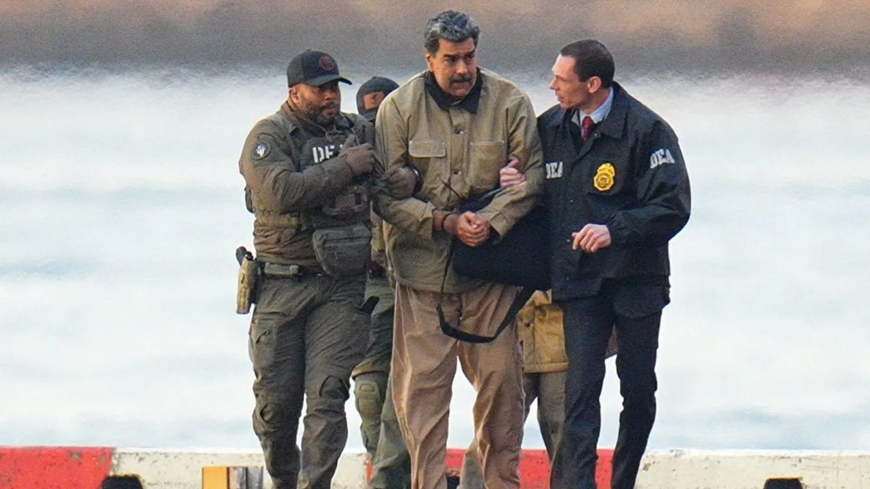
Nicolás Maduro’s appearance in a federal court in New York became a key moment in the development of the crisis around Venezuela. The former president publicly stated that he considers himself a prisoner of war rather than a criminal defendant, thereby challenging the legitimacy of the judicial process in the United States.
Maduro told the court that he was arrested at his home in Caracas and brought to the United States against his will. He emphasized that he continues to consider himself the acting president of Venezuela, declared his innocence, and stated that his detention is political rather than legal in nature. This position directly contradicts the U.S. interpretation, which treats the case as a criminal prosecution.
The context makes these statements especially significant. The United States has effectively acknowledged conducting an operation against Venezuela’s leadership, which has already sparked international disputes over violations of sovereignty. Maduro’s claim of prisoner-of-war status raises questions about the applicability of international humanitarian law and the limits of U.S. court jurisdiction.
An additional signal was the choice of legal defense. According to media reports, Maduro hired attorney Barry Pollack, who previously represented Julian Assange. This indicates an intention to build a defense around the political character of the prosecution rather than focusing solely on specific criminal charges.
For the U.S. judicial system, this creates a complex situation. On the one hand, the case is formally criminal. On the other, the defendant refuses to recognize the court’s jurisdiction, insisting that his status is determined not by U.S. domestic law but by international norms governing armed conflict and the treatment of prisoners.
The consequences of this process go far beyond a single court case. Acceptance or rejection of the prisoner-of-war argument could set a precedent for similar cases in the future, especially as forceful operations are increasingly followed by legal proceedings in national courts.
Uncertainty remains regarding the further course of the trial. It is unclear whether the court will consider the political arguments of the defense or focus exclusively on the formal charges. However, it is already clear that Maduro’s case is transforming from a standard criminal proceeding into a symbolic dispute over power, sovereignty, and international law.
Do you have news that could become a sensation?
Or do you want to try yourself as an editor?
On altn.news , it's possible!
Share your materials, express your opinion, and test your skills as a journalist or editor.
It’s simple:
✅ Download the app:

✅ Register on the website.
✅ Create and publish your news.
Who knows, maybe your material will become the next big headline!
Start today on altn.news.

The editors are not responsible for the content and accuracy of materials taken, sent or received from other sources. The publication of such materials is carried out solely for informational purposes and does not imply automatic support or approval of their content.