

:format(webp)/YXJ0aWNsZXMvaW1hZ2UvMjAyNS85LzIwMjUwOTI2LWdhZi11NTUtMTcyLmpwZw.webp?w=1920)













Why Recognition of Somaliland Intensifies Regional Tensions
Qatar’s reaction to statements by Israeli authorities about recognizing Somaliland shows that this is not a minor diplomatic move, but a risk to the entire regional architecture.
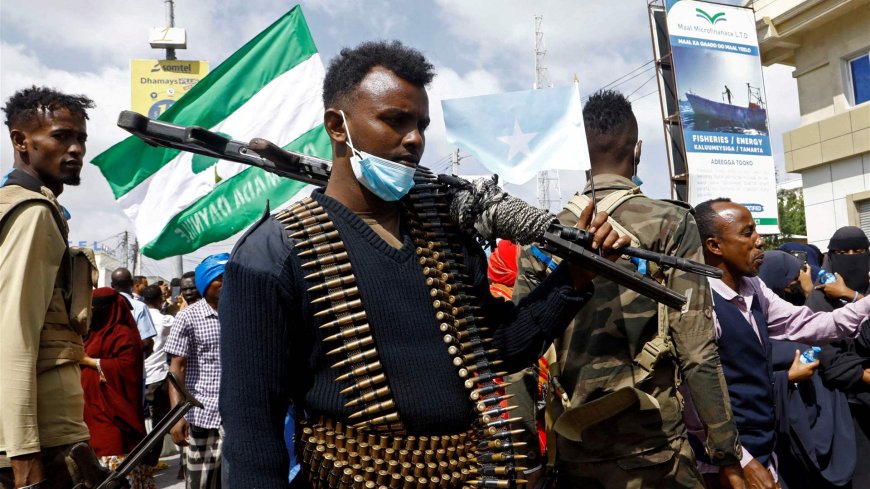
Qatar’s condemnation of Israel’s leadership over statements regarding the recognition of Somaliland reflects a broader conflict surrounding the principles of international recognition and territorial integrity. Formally, the issue concerns one region of the Horn of Africa, but in practice it affects the foundations of the international order and the balance of power in the Middle East and Africa.
For decades, Somaliland has sought international recognition, despite being officially considered part of Somalia. The majority of states and international organizations consistently adhere to the principle of Somalia’s territorial integrity, avoiding steps that could set a precedent for further fragmentation of the region.
Statements by Israeli authorities about recognizing Somaliland triggered a sharp response from Qatar. Doha emphasized that such decisions contradict international law and undermine stability, while also pointing to the contrast with Israel’s refusal to recognize the State of Palestine, which has already been acknowledged by a significant portion of the international community. In this sense, the criticism was directed not only at a specific step, but at the selective logic of recognition itself.
Qatar’s position did not remain isolated. More than fifty states expressed disagreement with Israel’s stance, citing risks to regional security and the potential erosion of existing borders. For the Horn of Africa, this implies rising tensions between centrifugal and centripetal forces, while for the Middle East it adds another layer of political polarization.
At the same time, official statements rarely acknowledge that such moves can be perceived as tools of foreign policy pressure and influence redistribution, rather than genuine support for self-determination. Recognition of Somaliland outside a broader consensus could trigger a chain reaction affecting other unrecognized or partially recognized territories.
It remains unclear whether the situation will lead to tangible changes or remain confined to diplomatic rhetoric. Mechanisms for implementing recognition and its implications for Israel’s relations with African and Arab states have yet to be defined. However, the scale of the international response shows that the issue goes beyond symbolic politics and touches on fundamental principles of international relations.
Do you have news that could become a sensation?
Or do you want to try yourself as an editor?
On altn.news , it's possible!
Share your materials, express your opinion, and test your skills as a journalist or editor.
It’s simple:
✅ Download the app:

✅ Register on the website.
✅ Create and publish your news.
Who knows, maybe your material will become the next big headline!
Start today on altn.news.

The editors are not responsible for the content and accuracy of materials taken, sent or received from other sources. The publication of such materials is carried out solely for informational purposes and does not imply automatic support or approval of their content.